Glass Wall Art & Paintings
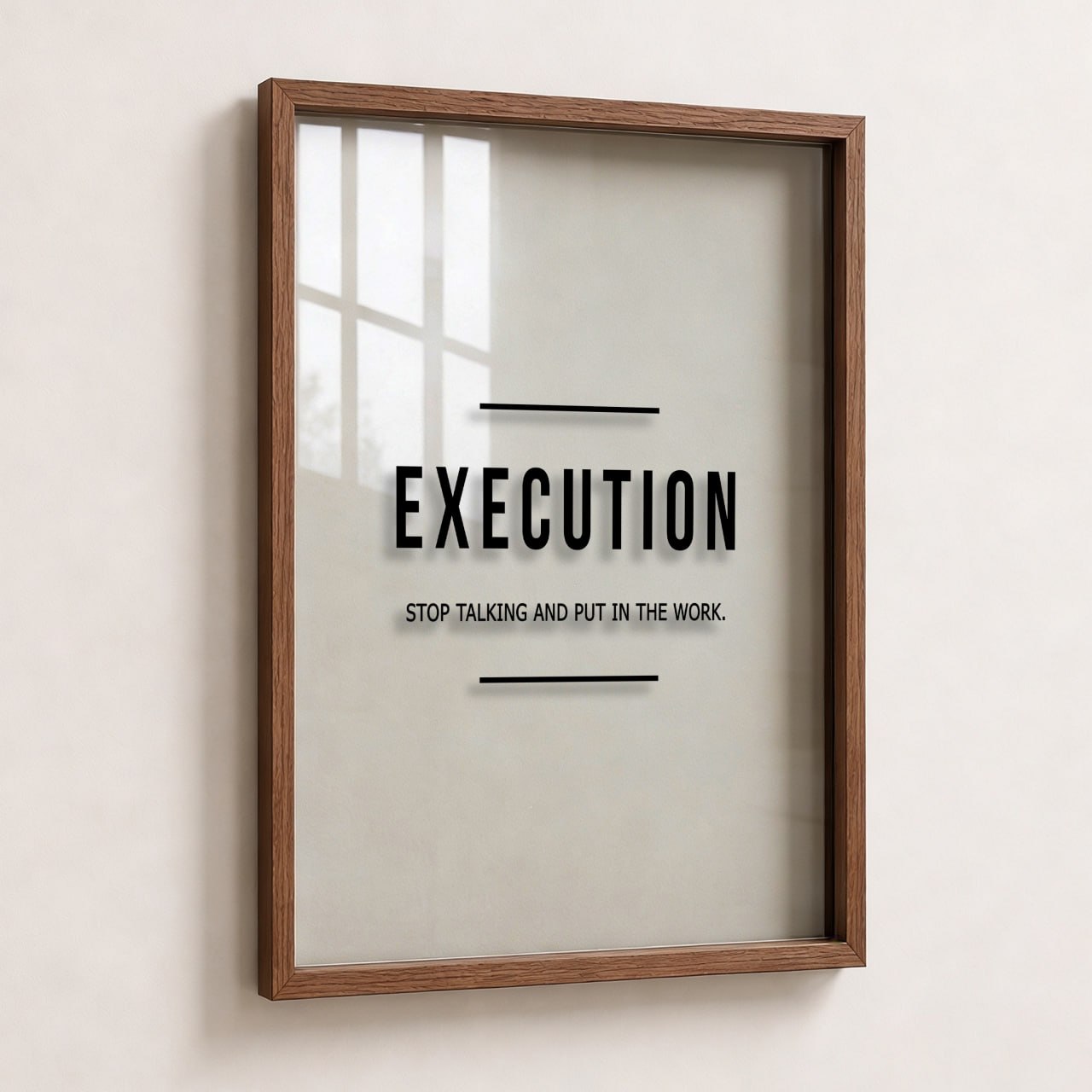
Glass wall art is any piece in our collection produced behind clear acrylic. That layer adds real depth: colour gains saturation, blacks read deeper, and the surface takes a wet gloss. Clean shapes and lettering hold up best under it, so minimal and typographic designs lead this page. The rest of the collection follows, and any artwork can be ordered with the glass finish.
5,000 products





Glass wall art and what the finish does
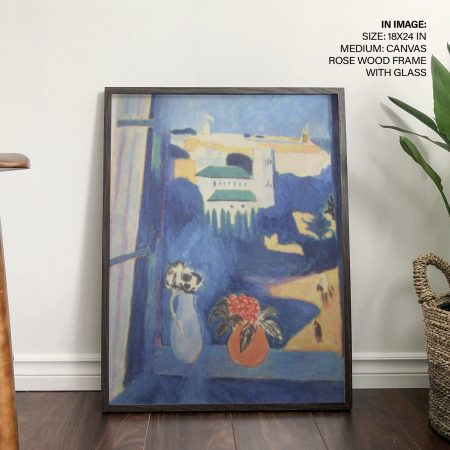
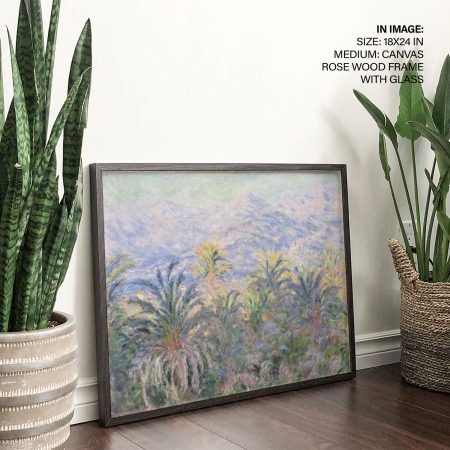
Glass wall art is printed and then set behind clear acrylic, so you look through a transparent layer at the image. That depth changes how colour behaves. Saturation lifts, blacks read deeper, and the surface takes on a wet gloss no flat print can produce. It is the most vivid way to hang a photograph.
Why minimal and typographic work leads
Clean shapes and lettering are what the finish flatters most. A single line of type or a pared-back geometric form gains authority behind acrylic, because the gloss reads as precision. Busy painterly images can look cold on a reflective surface. So minimal and typographic designs come first on this page, and the wider collection follows them.
Where it works
Best where light is controlled: a dining room, or a hallway that does not face a window. The same gloss that deepens colour will mirror a bright window back at you, so avoid hanging glass directly opposite one. It rewards saturated subjects, from botanicals through to macro photography.
Safety, weight and care
We use acrylic rather than true glass. It is optically near-identical at roughly half the weight, and it will not shatter, which matters in a home with children. Clean it with a microfibre cloth and a little glass cleaner. Avoid abrasive pads, which scratch acrylic more easily than glass.
Every artwork here is an archival print, hand-framed to order and delivered ready to hang — made in India.